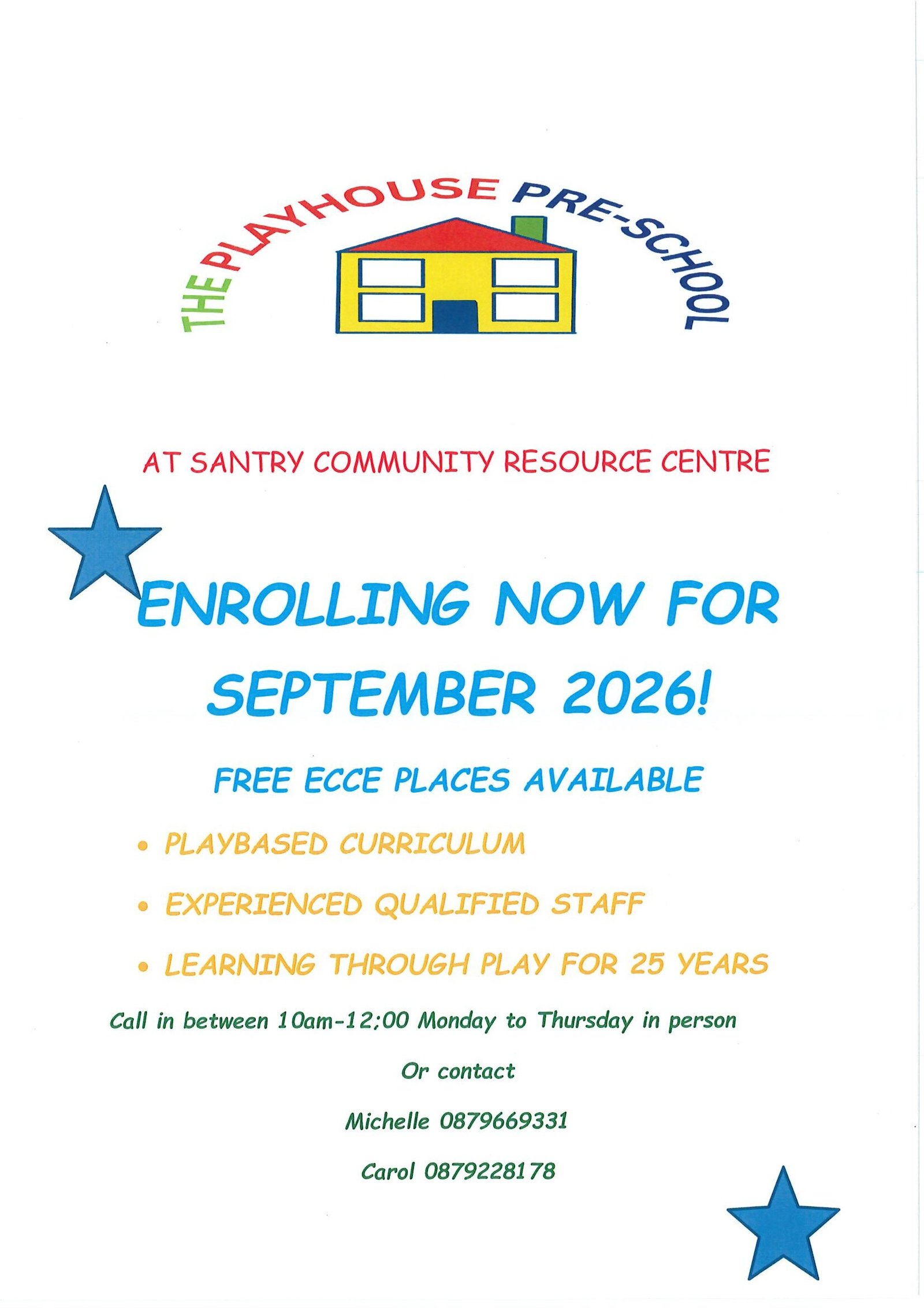
Our Playhouse Playschool has a small amount of ECCE places available for September. Children must turn 3 this year to qualify for their free place.
Why Play is a child’s real “Work” from age three up.
If you walk into a room and see a three-year-old deeply engrossed in building a tower out of mismatched blocks, or a four-year-old intensely negotiating who gets to be the “chef” in a pretend kitchen, it’s tempting to think, “Oh, look how cute—they’re taking a break from learning.”
But look a little closer.
What you are actually witnessing is a powerhouse of cognitive development, emotional regulation, and social engineering. For children aged three and up, play isn’t a break from learning. Play is the learning.
The Magic of the “Age Three” Shift
Around the third birthday, a child’s brain goes through a massive developmental leap. They transition from parallel play (playing next to a peer but not with them) to associative and cooperative play (interacting, sharing goals, and creating rules together). Their imaginations explode, their language hits top gear, and their physical coordination sharpens.
Because their brains are growing at such a staggering rate, rigid flashcards and passive screens can’t keep up. They need tactile, dynamic, trial-and-error experiences. Here is exactly how play builds a better brain from age three and beyond.
4 Major Benefits of Learning Through Play
1. Hardwiring the Brain for STEM (Science & Math)
When a child plays with blocks, water, or sand, they are acting as little scientists.
The Physics Challenge: Figuring out how high a block tower can go before it succumbs to gravity.
The Math Foundation: Counting out plastic dinosaurs, sorting buttons by color, or matching shapes in a puzzle. These aren’t just quiet activities; they build spatial awareness—a skill directly linked to later success in mathematics and engineering.
2. Emotional Regulation and the “Executive Function”
Executive function is the brain’s command center. It controls memory, flexible thinking, and self-control.
According to researchers at Harvard’s Center on the Developing Child, play is one of the single best ways to build these executive functions.
When children play a game with rules (even a simple one like Hide and Seek or Simon Says), they practice waiting their turn, managing frustration when they lose, and remembering instructions. These moments teach them how to regulate big emotions in a low-stakes environment.
3. Language Explosion Through Narrative
Listen to a group of four-year-olds playing dress-up. You’ll hear complex sentence structures, negotiation, and storytelling. Pretend play forces children to communicate their ideas clearly: “No, you have to be the sick puppy, and I’m the vet who gives you the magic medicine.” They pick up new vocabulary contextually and learn the social nuances of language, like tone and perspective-taking.
4. Fine and Gross Motor Mastery
Play keeps kids moving, which is vital for physical health. But it also dials in their mechanics:
Gross Motor: Running, climbing, and balancing on a playground strengthen large muscle groups and improve vestibulocochlear input (balance).
Fine Motor: Squeezing playdough, stringing beads, and maneuvering paintbrushes build the hand strength and dexterity required to eventually hold a pencil and write.